











![2023: A banner year for Star Trek — here’s why [Op-Ed]](https://treknews.net/wp-content/uploads/2024/01/star-trek-2023-year-in-review-600x337.jpg)





Review: Star Trek: Starfleet Academy Season 1 Episode 10 “Rubincon”
To our relief, Star Trek: Starfeet Academy delivers a finale that is much better than the previous episode, as a mother and son finally find closure and the Federation’s values are reaffirmed in a chaotic galaxy.
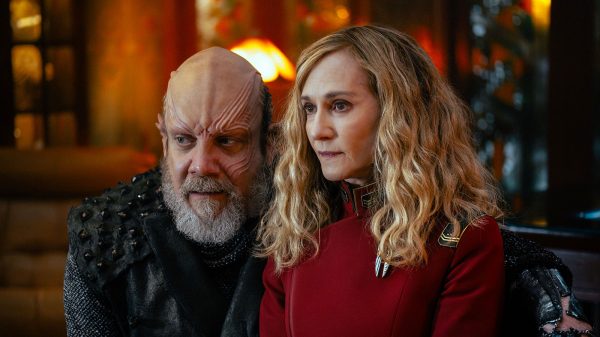
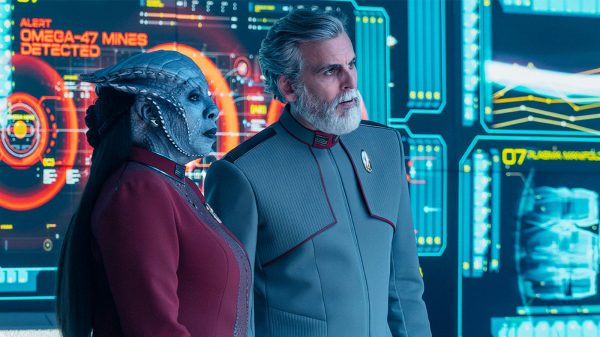
Hundreds of planets and billions of souls are threatened by the stranglehold Nus Braka (Paul Giamatti) has on the Federation thanks to his fleet of Omega mines. While he holds the knife at the Federation’s throat, he wants to put his nemesis, Nahla Ake (Holly Hunter) and the Federation on trial for the organization’s supposed crimes against the galaxy.
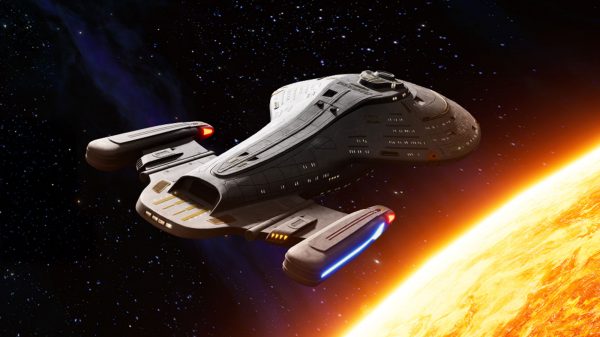
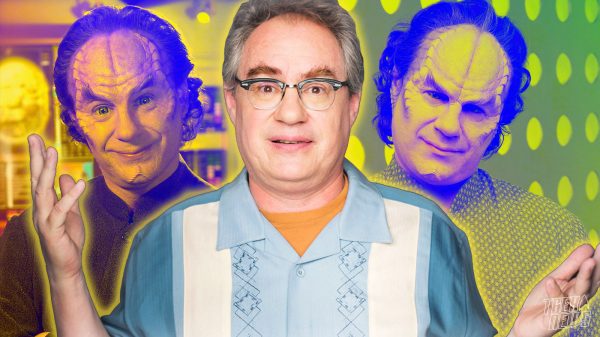
He’s able to do this by whisking Ake and Anisha Mir (Tatiana Maslany) away from Athena’s saucer before attacking the ship — but luckily, the Doctor (Robert Picardo) and Ake subtly plan to project a hologram image of Athena so the Venari Ral think the ship is destroyed. The Doctor, for his effort, suffers some linguistic damage which leaves him unable to form coherent sentences.
“If anything happens to my son, I’ll kill you.”
“If anything happens to your son, you’ll be doing me a favor.”
– Anisha and Ake as the Venari Ral attack Athena.
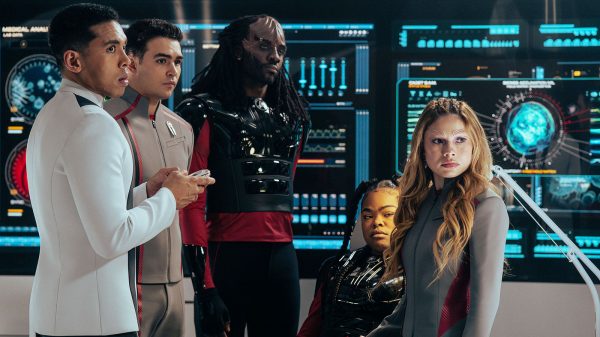
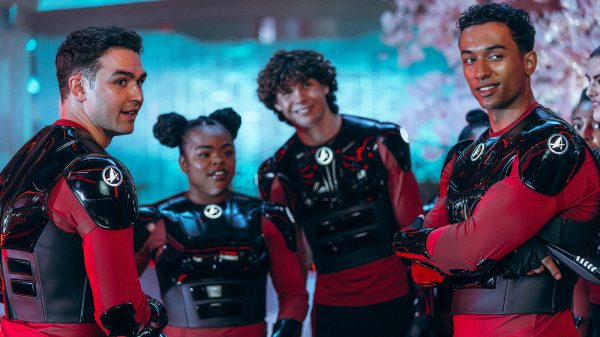
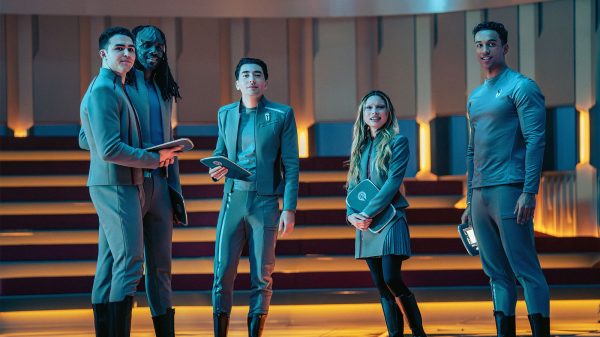
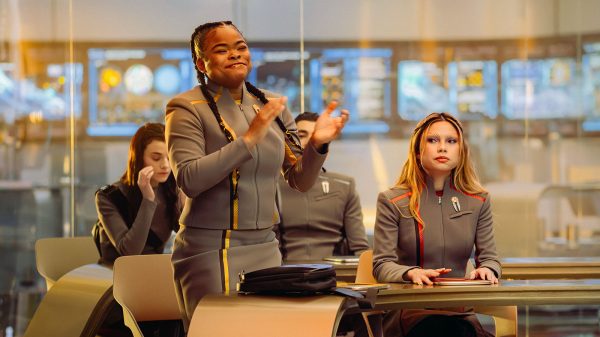
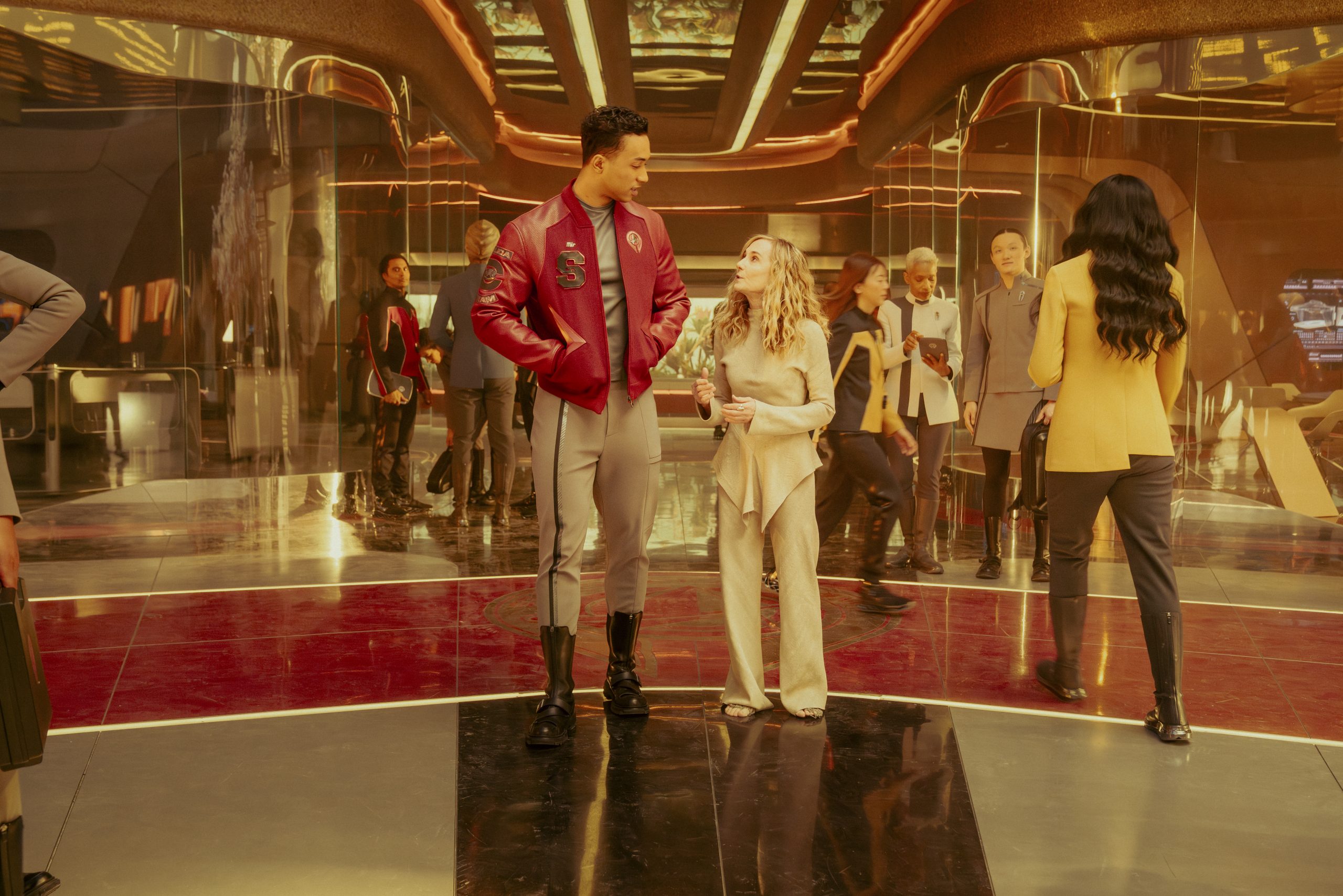
With Ake gone, this leaves Jett Reno (Tig Notaro) and cadets Jay-Den Kraag (Karim Diane), Genesis Lythe (Bella Shepard), Tarima Sadal (Zoe Steiner), Darem Reymi (George Hawkins), Sam (Kerrice Brooks), and Caleb Mir (Sandro Rosta) on the crippled Athena — and they are the Federation’s only hope to stop Braka. It’s a tough position to be in for the inexperienced cadets, and to her credit, Reno gets some major time in the leadership spotlight as she guides the cadets through this life-or-death scenario.
The Televised Revolution
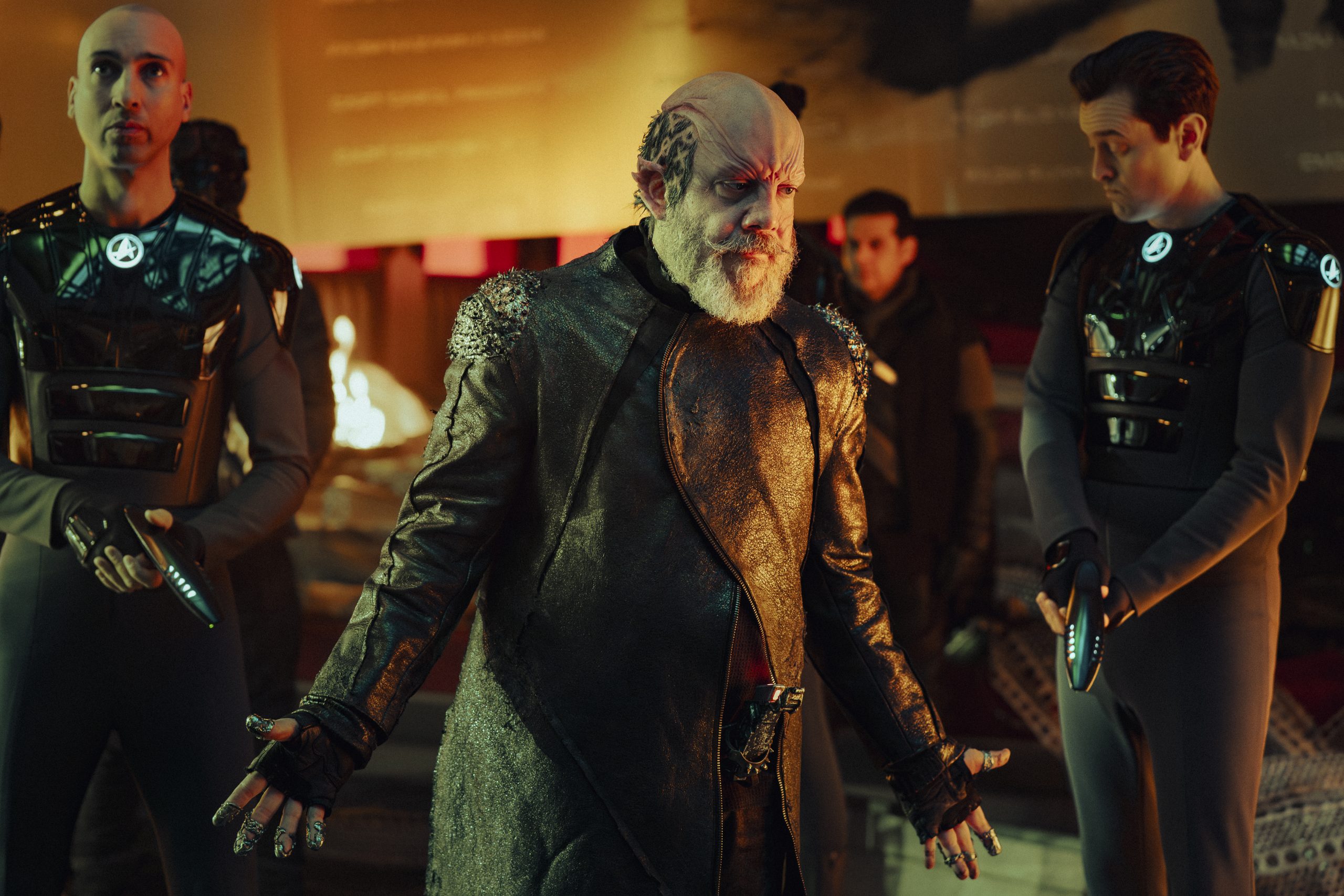
In the damaged Atrium that is now ensnared by the Venari Ral fleet, Braka is at his most dramatic, grandly placing Ake on trial in front of assembled factions from across the quadrant — his future potential allies. He broadcasts the trial live, explaining how the Federation initially ignored, and then bombarded, his colony with “red hellfire” when he was a kid, which instilled his deep-seated hatred for the supposed do-gooders. The colony mined the element stongtiem, which is important later — as is the color of the weaponry used on Braka’s colony.
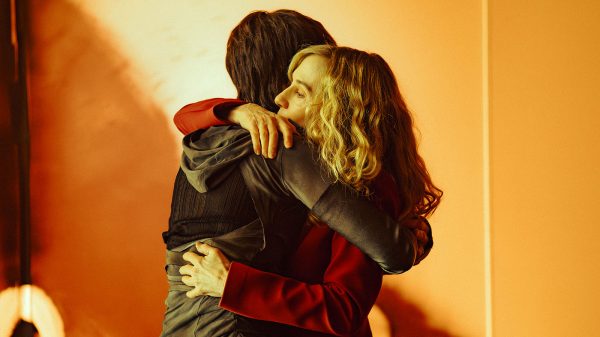
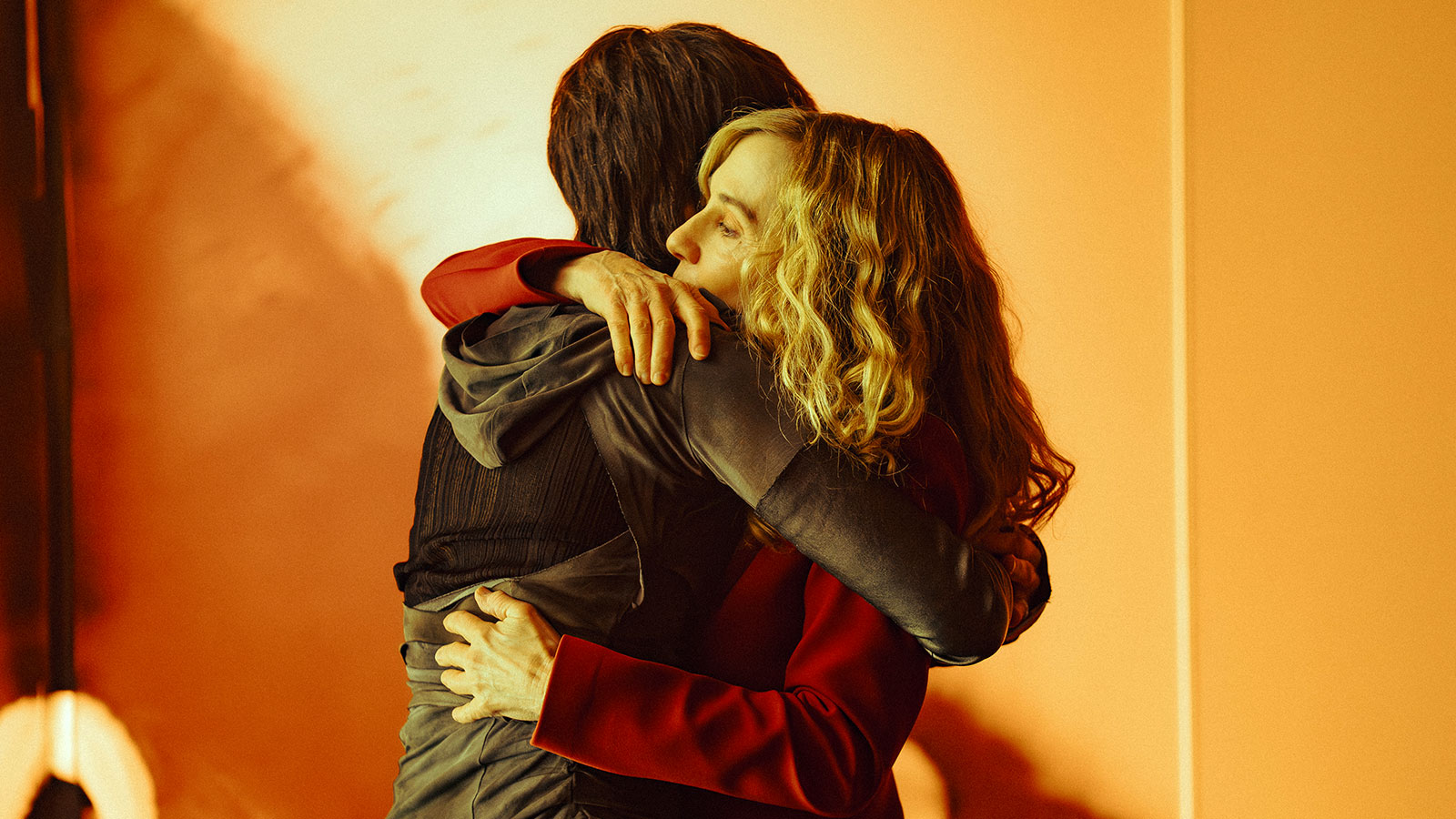
While Ake symbolizes what the Federation is, Anisha symbolizes how the Federation has harmed the people of the galaxy, and Bracka turns the proceedings over to Anisha — the judge and jury of this trial — to lay into Ake. As expected, the mother is still raging at the chancellor for separating her and Caleb — and, worst yet, not trying hard enough to make amends. Anisha gets pretty emotional at Ake, even expressing how she wants to metaphorically — if not literally, given the chance — dance on her grave.
“You can let fear take you down, or you can identify it as useless and step into a better solution.”
– Jett Reno as she rallies the cadets.
On Athena’s saucer, Reno and Mir conduct much-needed repairs. Reno uses the moment to give Caleb a pep talk, as the young man is feeling guilty about his inability to help those closest to him. Reno assures him this isn’t true. Recalling their first talk, Reno says Caleb now knows who he is — someone who deeply cares for those close to him. This uplifts Caleb, which refocuses him on the task at hand.
The cadets devise a plan to stabilize Omega-47, which would render Braka’s minefield impotent. The cadets discovered this because the Doctor — who is stricken with a kind of aphasia — was able to impart to his daughter, Sam, how Omega can be neutralized by altering the bonds that hold Omega molecules together. This, combined with Tarima locating the subspace frequency the mines are operated on, would potentially allow the cadets to save the day. But how do they find where Braka is?
Caleb knows the answer. He spares a moment with Tarima to share their mind paradise together, in the way they did before the tragic events of “Come, Let’s Away.” Here, Caleb asserts how Tarima doesn’t need her telepathic inhibitor, and that she is perfectly capable of living her own life on her own terms.
More to the point, Tarima’s unleashed abilities could help them locate Anisha — using something akin to telepathic echolocation — thanks to the bonds Caleb shares with his mom and with Tarima. It’s a leap of faith, for sure, but Tarima’s success is a meaningful reflection on the power of connection — in this case, the romantic link between her and Caleb, and the familial link between Caleb and Anisha. If there’s one universal truth in this galaxy, it’s the power of love, and it can do incredible things.
In a sweet moment, Tarima, after locating Braka’s forces, tells the obviously grateful Caleb, “I love you, too,” without him ever needing to say a word.
“I want you to have no shelter from this. I want you to feel it every day like the cold, hunger, or a broken bone.”
– Anisha to Ake on Ake’s shame for past actions.
At the trial, Ake tries to reason with Anisha’s rage, explaining how everyone has to live with the consequences of their decisions — including Anisha, who played a role in killing a Starfleet pilot, an event that ultimately landed both her and Braka in jail. Ake humanizes Anisha’s actions in a way that makes the mom ponder who exactly has done right and wrong, and makes her question Braka’s us vs. them worldview — not that it stops her from pronouncing Ake guilty of the charges Nus levels at her.
Showdown
With Athena arriving at Braka’s location in the Beithir System, it’s time for the cadets’ final exam. Caleb heads over to the trial alone, buying time for his friends to disable the minefield and trying to convince his mom that Starfleet aren’t the bad guys. He has plenty of good things to say about Nahla, too — and it was at this point we wondered why Braka didn’t terminate the broadcast of the trial, since it clearly started to turn against him.
Vitally, Ake and Mir make Braka realize the Federation actually weren’t the ones responsible for the destruction of his colony and family — it was only through the eyes of a child, as Braka was back then, that one would confuse how the colony came to be destroyed. In reality, the stongtiem used in Braka’s father’s weapons colored the weapons fire that destroyed the colony; it wasn’t the Federation who bombarded the colony, as they use blue weapons. Braka never stopped seeing that event through the eyes of his childhood.
Desperate and crazed, Braka tries to detonate the Omega mines, but the cadets sever his connection to them just in the nick of time. With Braka’s allies abandoning him and his grip on the Federation taken away, a Starfleet task force shows up, headed by Admiral Charles Vance (Oded Fehr), to take Braka into custody. Caleb tells Braka to keep hold of how much he hates Caleb, because it’ll keep him warm at night — the same thing Braka told Caleb 16 years previously.
With the academic year at an end and things returned to normal, our cadets have a chance to breathe. Caleb and his mom plan to travel off campus for the summer break, but Caleb asserts he’ll be back at the Academy for the upcoming semester — and that’s okay with Anisha. The season ends with the first log entry we’ve heard from Caleb Mir. He says how he appreciates the people he has met at the Academy, and that it is now his home. The end credits roll over shots of this show’s actors when they were younger, a neat touch that helps foster our connection to these people that goes beyond the fiction we see on screen.
Analysis
We were worried after “300th Night” that this show would drop the ball in its first season finale, but we were mostly satisfied with what “Rubicon” delivered. The episode spared no time in displaying the grief Anisha felt over losing her son, or how she could then be persuaded that the Federation, despite the sins of the past, is an altruistic organization. It speaks to the power of Caleb’s experiences at the Academy and the strength of his found family that he eventually won her over.
Nus Braka’s journey through this season ended on a surprising note, if only because we learned his motivation has all along been based on his experiences as a child. To have that worldview shattered reflects on how our childhood warps our perception of reality even into adulthood, sometimes to devastating results. The experiences of youth is a prevalent theme in this show, and Braka’s arc shows how that experience can be misunderstood and misused. It’s a shame we only saw Braka three times this season, but it was enough to solidify Paul Giamatti’s character as one of the most memorable villains of modern Trek.
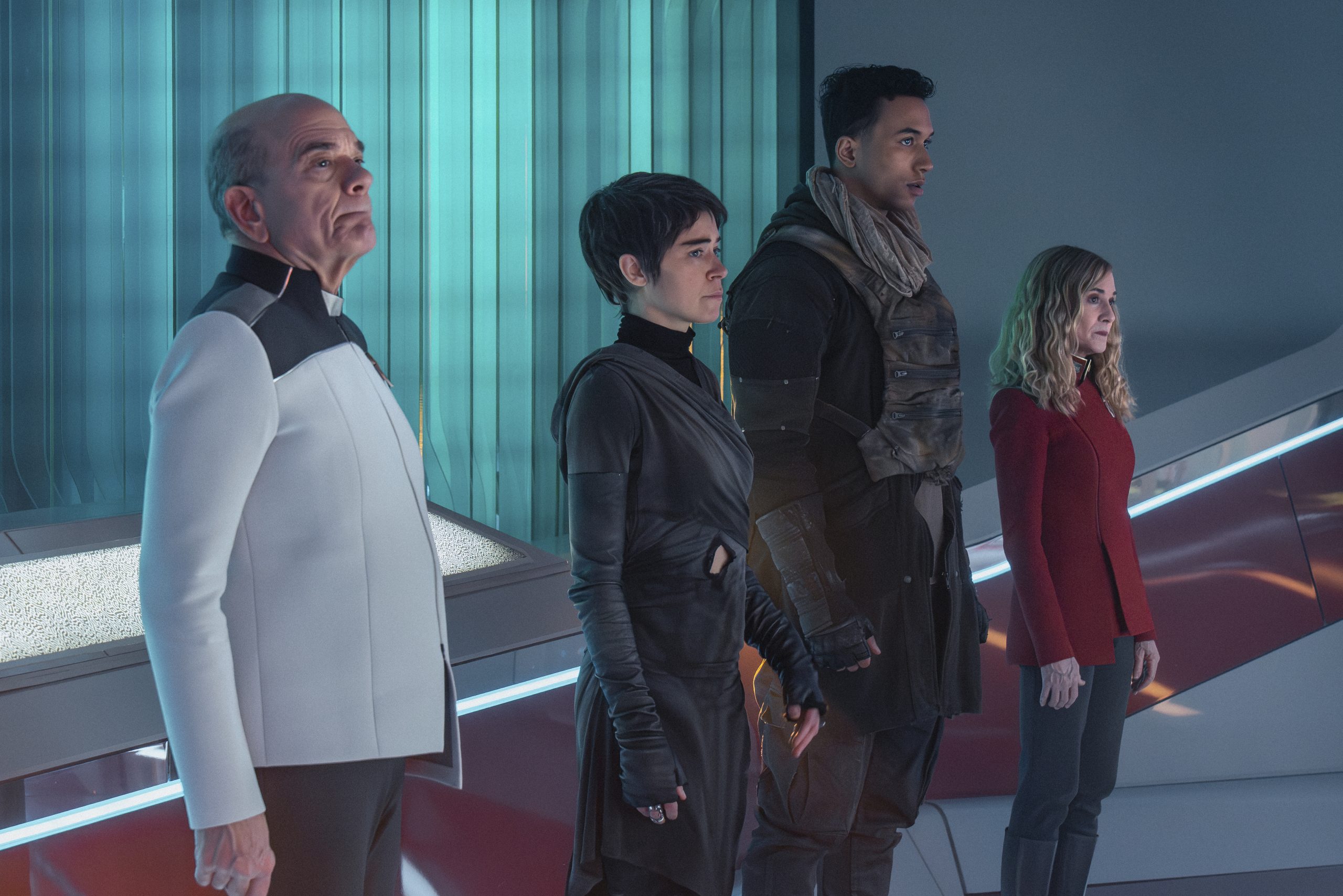
The future for the cadets is bright as they head into season two, which recently wrapped filming. Caleb and Tarima have solidly become an item, their bond strengthened by Tarima being able to find Caleb’s mom across space and time. The only cadet who might face some trouble ahead is Sam, who has radically changed since she was reborn and raised under the Doctor’s parentage. Sam is no longer the happy go-lucky child she was, and instead she now looks back on her first self as naive. Despite having the support of her friends, notably Genesis, who Sam considers a leader, we expect Sam to face some serious coming-of-age questions about herself.
Starfleet Academy is certainly meaningfully different from Trek that has come before, and that’s largely a good thing — but it’s also recognizable enough to warrant its prominent place in the Trek pantheon. We think it has earned itself a second season, as we are invested in these characters and the stories they weave with their shared time at Starfleet Academy.
Stray Thoughts:
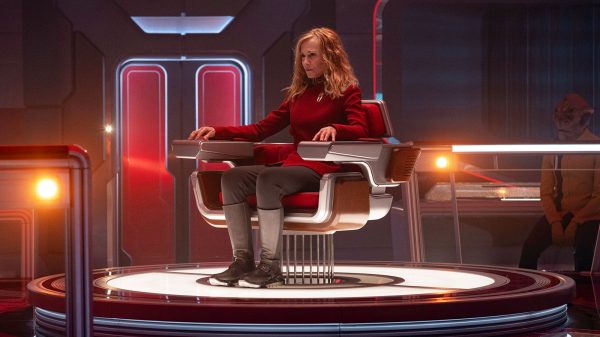
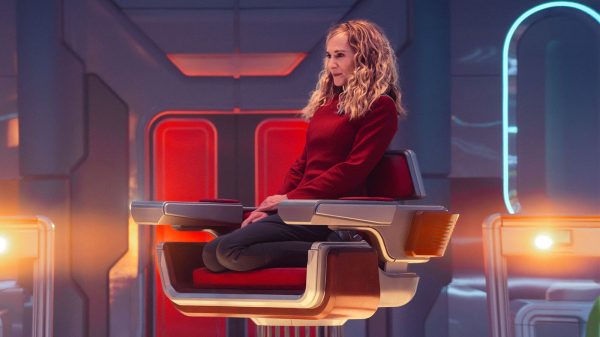
- This episode claims our prize for dumbest, most out-of-place moment in any Star Trek episode we can think of: Genesis’ quip about needing to use the bathroom just when she sits in the captain’s chair. What a way to humorlessly sabotage an emotionally charged moment. We heard a lot in “Ko’Zeine” about how she wanted — needed — to sit in that chair, and this is how it happens?
- Vance says the Federation can’t locate the subspace signal that Braka is using for the mines while they are behind the minefield wall. Why not? Why does Athena being on “outside” of the wall mean the cadets can scan for the signal but the rest of the Federation can’t?
- Ake says in this episode that the Federation was artificially creating Omega molecules because even one particle could power a world for a million years. Seems like a poor choice, then, to leave that technology protected by only one ship at a space station.
- Did the Doctor’s speech also impact his writing? Could he have written out what he wanted to say if he couldn’t say it?
- Did you catch Discovery outside Athena’s window at the end of the episode?
Stay tuned to TrekNews.net for all the latest news on Star Trek: Strange New Worlds, Star Trek: Starfleet Academy, Star Trek: Section 31, Star Trek: Lower Decks, Star Trek: Picard, Star Trek: Discovery, Star Trek: Prodigy, and more.