



















![2023: A banner year for Star Trek — here’s why [Op-Ed]](https://treknews.net/wp-content/uploads/2024/01/star-trek-2023-year-in-review-600x337.jpg)






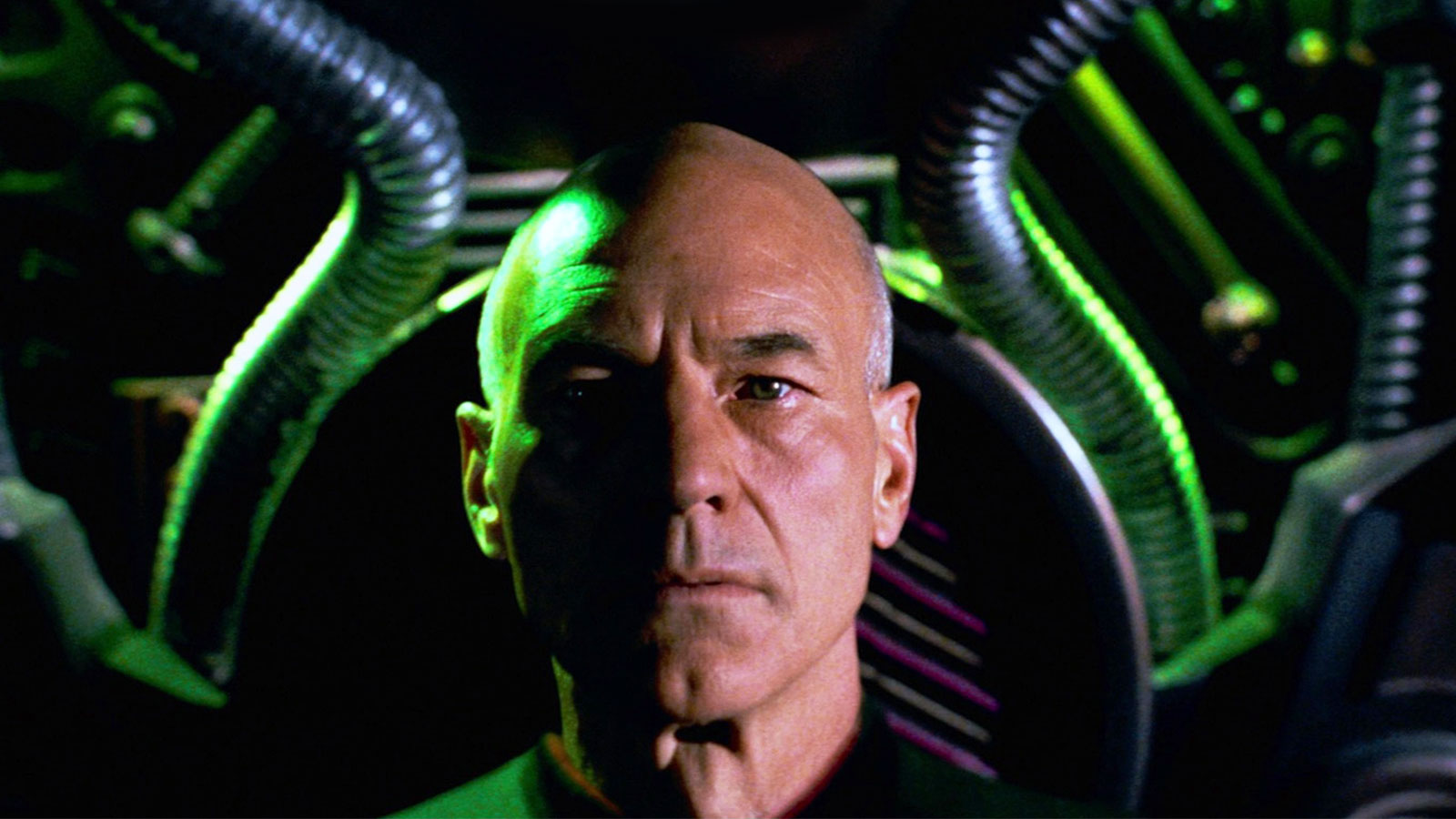
A faithful retelling that proves even tie-ins can boldly go deeper.
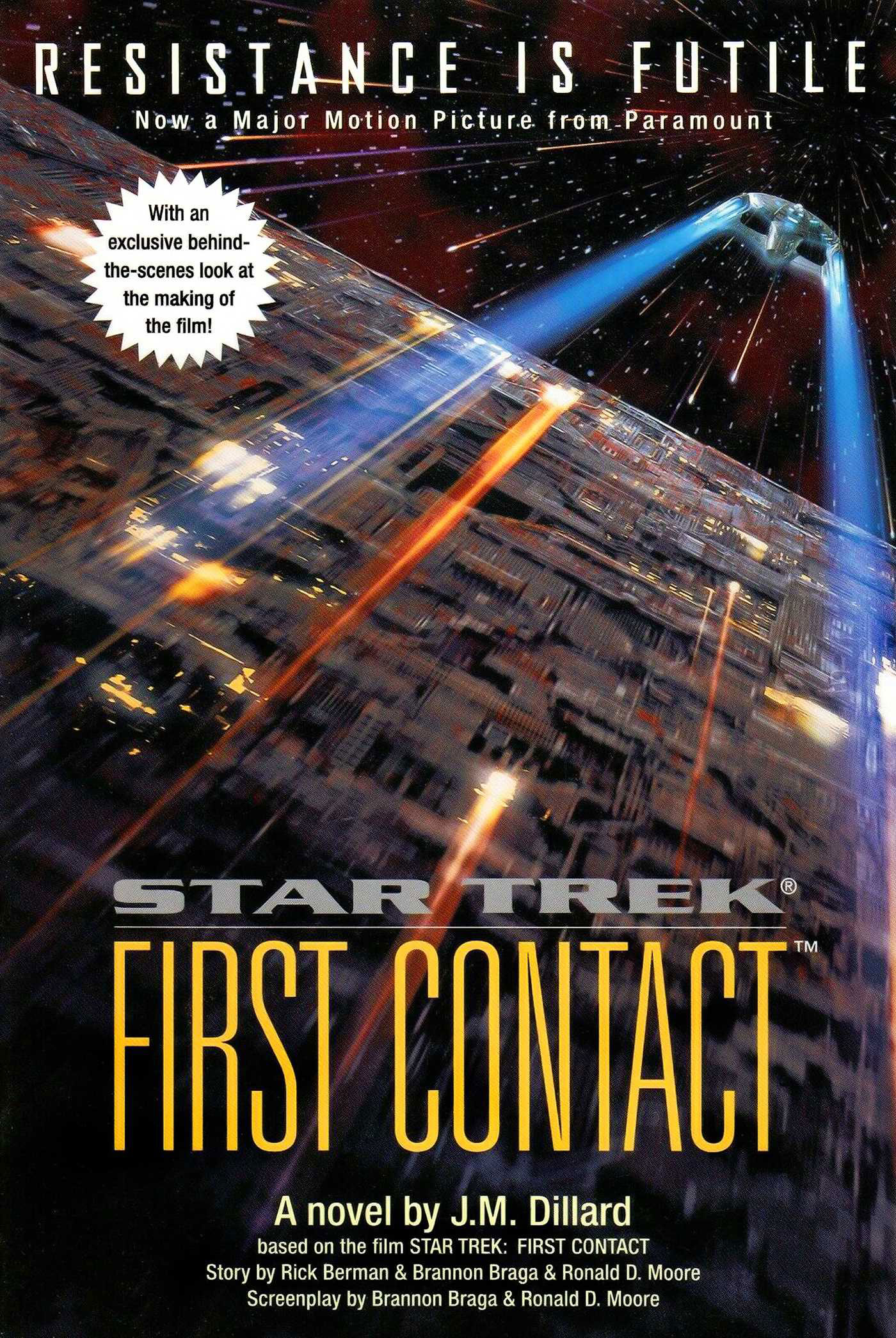
Last year, we revisited the novelization of Star Trek: The Motion Picture, having found a first edition for mere dollars in a local book store. This year, upon seeing the opportunity to grab the novelization of Star Trek: First Contact for all of $1 in another book store, we knew we wanted to revisit this story in the same way we did the 1979 classic. We are glad we did.
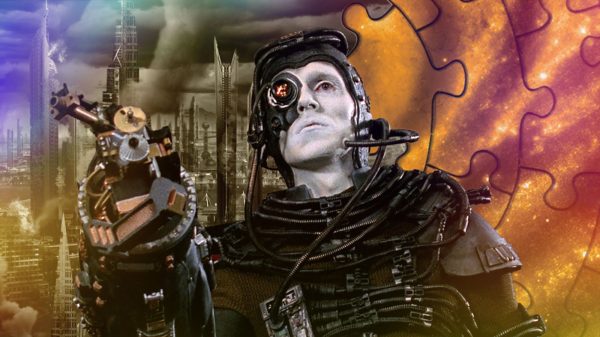
The novelization of Star Trek: First Contact, written by J.M. Dillard, not only holds up well to its source material, but also enriches our understanding of the characters in the film, making it a compelling read even for those intimately familiar with the classic movie. While the book dutifully follows the movie’s plot — the Borg’s attempt to prevent humanity’s first warp flight and the Enterprise-E‘s subsequent time-travel mission — its strength lies in deeper character development that elevates it beyond a simple transcript.
Two characters, in particular, benefit immensely from the novel’s expanded scope: Lily Sloane and Zefram Cochrane, played by Alfre Woodard and James Cromwell in the movie, respectively. The novel delves into Lily’s backstory, fleshing out her motivations for working with the brilliant but unpredictable Cochrane and establishing her as a steely survivor of World War III. Her toughness is rooted in profound loss; her mother died of cancer, a tragedy exacerbated by the fact that medicine that would have saved her was no longer commonplace in the chaotic post-WWIII world. This tragic background — plus the ability to get inside Lily’s head and learn how she thinks and feels about the post-war years and her time with Picard — provides vital context for her cynicism and resilience, making her work on the Phoenix all the more potent.
Similarly, Zefram Cochrane is given a significant layer of psychological depth. The book reveals that Cochrane suffered from mania, a mental condition that would have been easily treatable prior to the global conflict. This mania, left untreated, is portrayed as a major catalyst for his tireless work on the Phoenix project. The novel also explores the cyclical nature of Cochrane’s condition, showing that his manic periods were often followed by debilitating depression, which fueled his alcoholism. None of this history is explored in the movie. Cochrane gets a happy ending in this regard, though, as Beverly Crusher — Prime Directive be damned — injects Cochrane with a permanent cure for his mania; this doesn’t happen in the film.
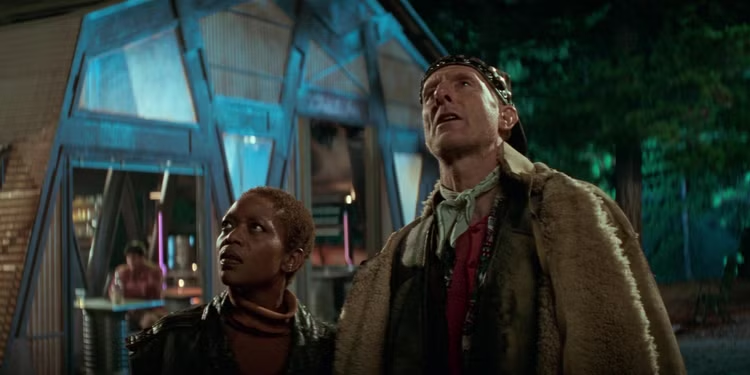
By characterizing both Lily and Cochrane with such expanded, humanizing backstories and struggles — much of which is only hinted at in the film — the novel provides a richer, more sympathetic understanding of the two figures who were pivotal to Star Trek history.
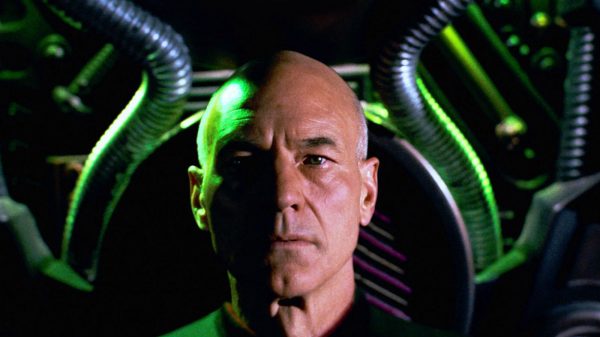
The last major difference between the book and movie we noticed regards Picard’s struggle with the Borg as they rampage through his ship. By virtue of being able to be in Picard’s thoughts, the readers gain a more intimate understanding of just how much he hates the Borg, and the psychological trauma they caused him not just six years before, but during their siege on the Enterprise–E. While Patrick Stewart’s performance in First Contact is definitely still a highlight of the character’s on-screen career, there’s something far more unsettling and revealing that comes with J.M. Dillard’s ability to put those all-consuming and tormenting thoughts to words. If Picard’s struggle with the Borg is the highlight of First Contact for you, do yourself a favor and read this novelization.
Preparing for Battle
The novelization of Star Trek: First Contact also includes a lengthy promotional write up for the movie, which was written before the movie came out. The piece, written by Star Trek vets Judith and Garfield Reeves-Stevens, mainly focused on how the film’s plot came to be (it started as a time-travel story to the Italian Rennessiance), and hyped up the fact that the Borg will be realized in all their big-budget glory compared to their depiction in Star Trek: The Next Generation.
Notably, the article heavily promotes the hull battle — what we see in the movie as the confrontation between Picard, Worf, and Hawk with the Borg on the Enterprise-E’s deflector array — as the most exciting sequence in the film, enough to make fans come back to the theater. We think either this sequence was scaled back from when the Reeves-Stevens article was written, as they characterized that battle as having more combatants on both sides and being more spread across the hull than just confined to the deflector dish, or they were playing the playing the role of marketers a little too heavily. In our eyes, the deflector dish confrontation is definitely not the most bombastic part of the movie, or does the movie pretend as such.
Taken together, the novelization of Star Trek: First Contact was a fun read, with just enough differences from the movie to make our time with the book interesting. We appreciated most of all Dillard’s exploration of Lily and Zefram’s flawed and troubled characters, which, in the end, makes their landmark accomplishment—first contact with an alien race— all the more profound.
You can find Star Trek: First Contact on Amazon or try your local bookstore.
Stay tuned to TrekNews.net for all the latest news on Star Trek: Strange New Worlds, Star Trek: Starfleet Academy, Star Trek: Section 31, Star Trek: Lower Decks, Star Trek: Picard, Star Trek: Discovery, Star Trek: Prodigy, and more.